STALLONE NETS $150,000 AS 2025 MAZDA MX-5 CUP SHOOTOUT WINNER
January 12, 2026
Racing to End Alzheimer’s scores podium finishes at the Roar Before the Rolex 24
January 19, 2026
LOS ANGELES (January 12, 2026) – The Racing to End Alzheimer’s with Stephen Cameron Racing team hits the ground running at the Daytona International Speedway this weekend, looking to get the 2026 racing season off to a productive start. The traditional visit to Daytona will feature a doubleheader in the VP Racing SportsCar Challenge as well as six and a half hours of IMSA Michelin Pilot Challenge (IMPC) testing ahead of next weekend’s four-hour IMPC season opener.
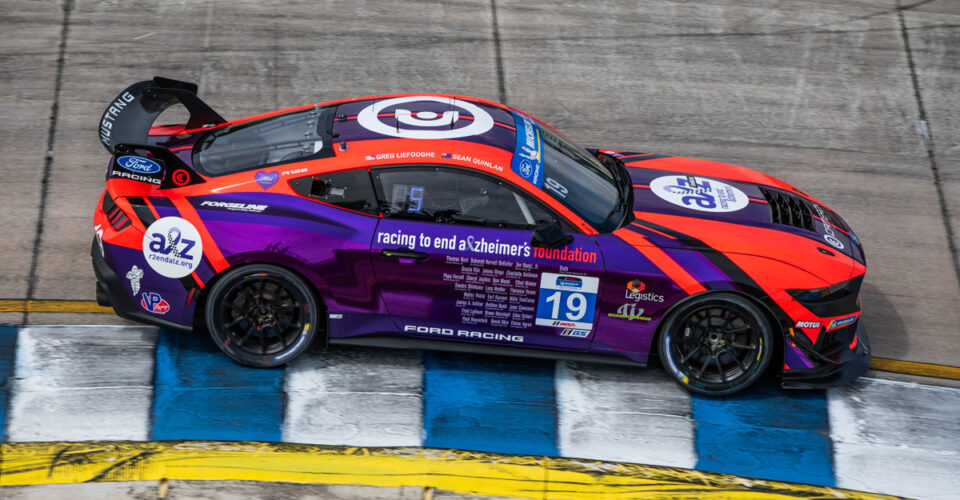
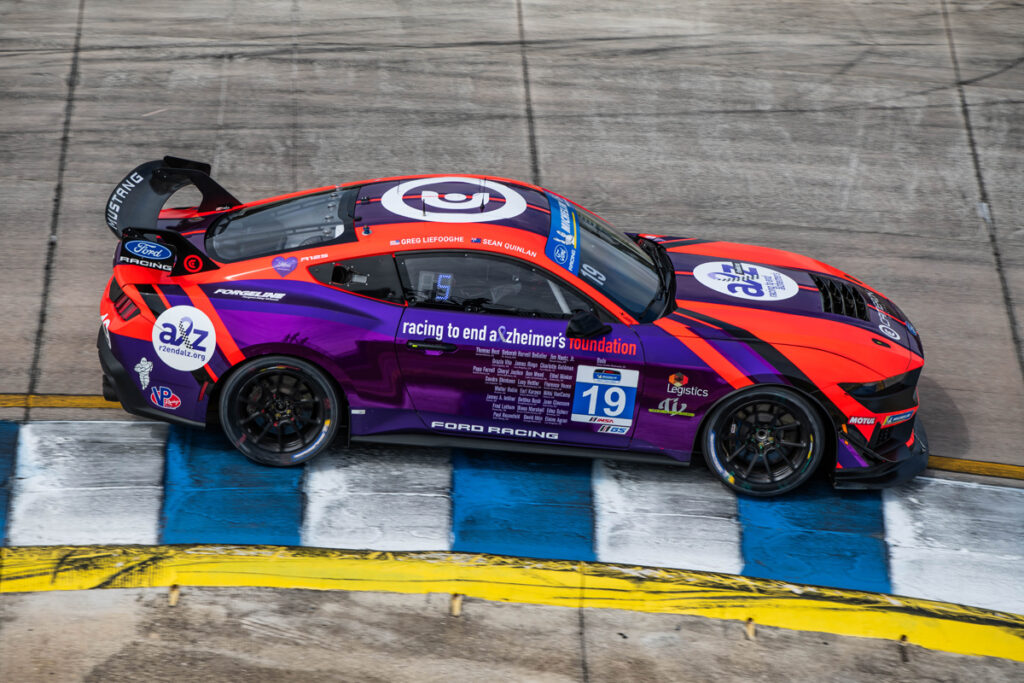
Racing to End Alzheimer’s drivers Sean Quinlan and Greg Liefooghe are back behind the wheel of the No. 19 Ford Mustang GT4, their eighth straight season with Stephen Cameron Racing. The Mustang is now adorned in even brighter red and purple Racing to End Alzheimer’s colors – but with the familiar “names” on board, honoring loved ones who have suffered from dementia and Alzheimer’s. Entering the Roar Before the Rolex 24 weekend, more than 50 names are on the car (add a loved ones’ name here).
Racing to End Alzheimer’s founder Phil Frengs eagerly anticipates the start of the 2026 campaign, one that will continue to honor his late wife Mimi, the inspiration for the program.
“After Mimi passed last April, we vowed to continue Racing to End Alzheimer’s in her honor,” said Frengs. “We have made a difference in the fight against this disease, raising over $1.2 million since we began in 2017. And this year, we will have two cars on select IMSA weekends, giving family and friends the chance to honor their loved ones on not just one, but two race cars.
“We are grateful to be back with Cameron Racing in 2026,” continued Frengs. “Steve Cameron, Sean Quinlan, Greg Liefooghe, and the entire team, have been outstanding to work with. They’re dedicated to racing and they have become dedicated to this fight, with many of the team members adding their own loved ones’ names to the car.”
The VP Racing series is in its third season, with races that feature the multi-class prototype GT mix that IMSA is known for, pitting LMP3 prototypes against GT cars, just like the main WeatherTech SportsCar Championship.
“Having a Ford Mustang identical to our main Michelin Pilot Challenge car in the VPRC gives us double the opportunity to honor these precious loved ones, and we can’t wait to get underway, especially since we’re adding a new series to our history!” added Frengs.
Quinlan will contest the pair of 45-minute VP Racing SportsCar Challenge events this weekend, as well as the doubleheaders at Mid-Ohio, Canadian Tire Motorsport Park, VIRginia International Raceway, and Michelin Raceway Road Atlanta (schedule permitting). Liefooghe looks forward to the additional track time to dial in both car and driver.
“This is our third year racing the Ford Mustang, so I think we’re poised more than ever to have a great Daytona,” said Liefooghe. “The Mustangs have been good there historically. And with 34 cars in the Grand Sport class, it’s one of the biggest fields in years. It’s going to be good for us to do the VPRC sessions as well, to get the whole team back into race shape before the main event and to have that much more track time to work on setup and get back into the feel of the car. Off-season testing is great, but nothing replaces track time on the race weekend.”
Off-season accolades
Late last year, Frengs received the prestigious Ken Venturi “Spirit of Giving” award from the Southern California-based Friends of Golf (FOG). The Spirit of Giving award, named in honor of legendary golf announcer and philanthropist Ken Venturi, honors individuals for contributions to golf and to the greater good – which describes Frengs to a tee (pun intended!) Past award recipients include Al Michaels and the late, great Los Angeles Dodgers announcer Vin Scully.
Full story here.
A board member and past president of the SCGA Junior Golf Foundation, Frengs hosts annual tournaments at both the Pebble Beach Golf Links and his home Palos Verdes Golf Club that have raised millions of dollars for the women’s golf team at UCLA, his alma mater, and has helped create hundreds of thousands of college scholarships through the Southern California Golf Association (SCGA) Junior Golf Foundation.
“I was very proud and honored to be the recipient of the 2025 Ken Venturi Spirit of Giving Award from Friends of Golf,” said Frengs. “Ken was known as the ‘First Gentleman of Golf,’ and while I might not have that same accolade, I certainly share Ken’s commitment to giving back and I am truly grateful to be recognized with an award in his name.”
The No. 19 Racing to End Alzheimer’s Mustang gives families the chance to honor loved ones who have suffered from Alzheimer’s disease or other forms of dementia. For a $250 donation, the family member’s name and hometown is placed on the car, and their photo can be posted on the Racing to End Alzheimer’s website’s tribute page. All donations are matched by Frengs’ company Legistics, with 100% going to the program’s two beneficiaries – the Nantz National Alzheimer Center at Houston Methodist, and the UCLA Alzheimer’s and Dementia Care Program.
Racing to End Alzheimer’s with Stephen Cameron Racing begins the 2026 Michelin Pilot Challenge season at the Roar Before the Rolex 24 test weekend January 16-18, with the season opener Saturday, January 24, 2026. The race will be broadcast live in the U.S. on Peacock TV, and internationally on IMSA.tv and on IMSA’s YouTube channel – ad-free courtesy of Michelin.
About Racing to End Alzheimer’s
In 2013, Phil Frengs’ late wife Mimi was diagnosed with early-onset Alzheimer’s Disease. Their experience led Frengs to a seminal moment: his company, Legistics, had long sponsored a team in IMSA sports car racing and he realized an opportunity to raise money and awareness for the fight against the disease. In 2017, he formed Racing to End Alzheimer’s, giving fans the opportunity to honor loved ones by putting their names on the race car via a $250 donation – with Legistics matching each donation. 100% of those donations go to the two organizations the team supports:
The Nantz National Alzheimer Center at Houston Methodist is exploring cutting edge strategies in therapy, care and research to find a cure for these dementias. NNAC was founded by longtime CBS Sports broadcaster Jim Nantz and his family in honor of his father, Jim, Jr., who passed away after a 13-year battle with Alzheimer’s.
The UCLA Alzheimer’s and Dementia Care Program is a nationally-recognized grant-funded program designed to help patients and their families with the complex medical, behavioral and social needs associated with Alzheimer’s disease and other types of dementia.