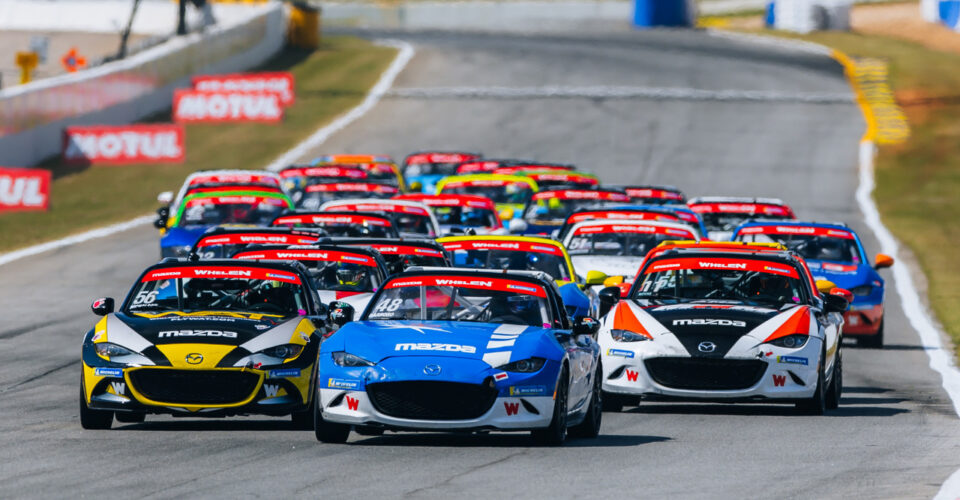
Racing to End Alzheimer’s takes 7th at Sebring
March 22, 2026
“Never give up” attitude puts Racing to End Alzheimer’s into fourth at COTA SRO
April 29, 2026
Not because I don’t know, but because it is surprisingly hard to explain without watching their eyes glaze over halfway through. So I stopped trying to give the long answer.
Now I just say, “I make sure drivers show up in the winner’s circle and give them high fives when they do.”
It always gets a chuckle.
But it also shrinks what public relations actually is.
Because what I really do, and what so many of us in PR do, is built on invisible labor.
PR is often one of the first budget lines to get cut, especially in motorsport. Not because it is not valuable, but because so much of the work that makes it valuable is never seen. We are not reporting every email we send, every pitch we refine, every set of talking points we build. When things go right, it can feel like good fortune just happens.
Like the commentators naturally know what to say about a program. They don’t.
Like the story just ends up in the right outlet. It doesn’t.
Like the moment was always going to unfold that way. It wasn’t.
I have a colleague who was live streaming and reporting on a race remotely when a broadcaster shared incorrect information about one of our clients. She had his cell number. While he was still on air, she texted him the correction. He saw it during the break, and when the broadcast came back, he fixed it live on air.
She never told the client.
She did not log it in a report or flag it as a win.
She just did it, because she cares about getting the story right.
That is invisible labor.
And it is also what makes PR a thankless job at times.
Not in a negative way, but in the sense that success is measured by how good you make everyone else look, not how good you make yourself look. If we do our jobs right, the driver (or client) sounds polished, the brand sounds intentional, the broadcast sounds informed.
We disappear.
And that is exactly how it is supposed to work.
Long before a story is published or a camera starts rolling, the work begins with pitching. Not just sending emails, but crafting angles that actually matter, understanding what each outlet needs and timing it so the story lands when it has the most impact.
Then come the layers of coordination. Scheduling interviews that seem simple on the surface but take dozens of moving parts behind the scenes. Making sure the right people are available, prepared, aligned and actually show up when and where they’re supposed to.
There is also the preparation no one notices. Making sure everyone is camera ready, not just in appearance but in message. Building talking points that feel natural, not scripted. Anticipating the obvious questions and the unexpected ones. And sometimes even writing the questions. Because interviewers do not always have time to fully prepare, and part of the job is making sure the right questions get asked so the right story gets told.
It also means paying attention to the details people rarely think about, even down to the small details like what is in the background of the shot? Is the camera positioned in a way that supports current sponsors or at least does not conflict with them? Is the client wearing the right branding? Those small details matter just as much as the words being said.
And then there are the just-in-case moments.
The notes prepared for announcers.
The backup quotes that may never get used.
The second version of a release sitting in drafts.
The conversations with photographers to get the right shots in Winner’s Circle if we make it there.
The quiet adjustments happening in real time to keep everything on track.
PR is often described as storytelling, but it is just as much about shaping outcomes without making it feel like anything was shaped at all. It is about creating an environment where everyone else can shine, where the message lands exactly as it should.
When it works, no one talks about the process.
They talk about the moment.
They remember the interview. The quote. The broadcast call.
They do not see the early mornings, the late nights, the constant communication or the mental checklist running at all times. They do not see the pressure of knowing that one missed detail can change how everything is received.
And that is the point.
Because in public relations, success is not measured by how visible your work is.
It is measured by how invisible you can make it feel.
The best PR does not need credit.
It makes everything else just happen.